SANCTITY / NOTES
The Bath Has a Naming Problem.
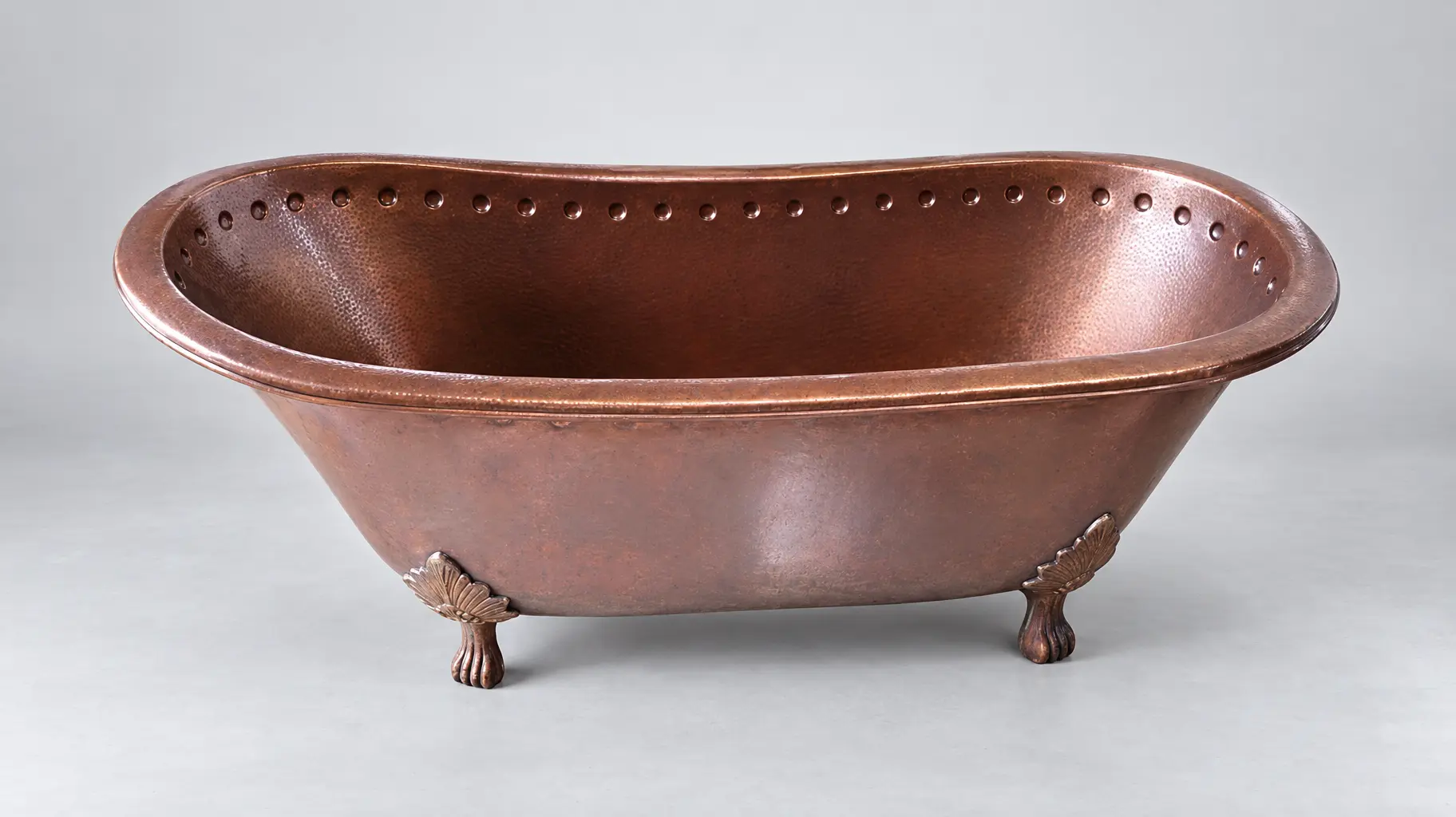
We’ve been looking at bathtubs for a while.
This is not as boring as it sounds.
The strange thing about bathtubs is that the industry has become very good at making them look expensive, and surprisingly careless about saying what they actually are.
Everything is French. Everything is Victorian. Everything is a bateau. Everything is a slipper. Everything is handmade. Everything is “inspired by.”
At some point the words stop describing the object and start decorating it.
And we don't think that's harmless.
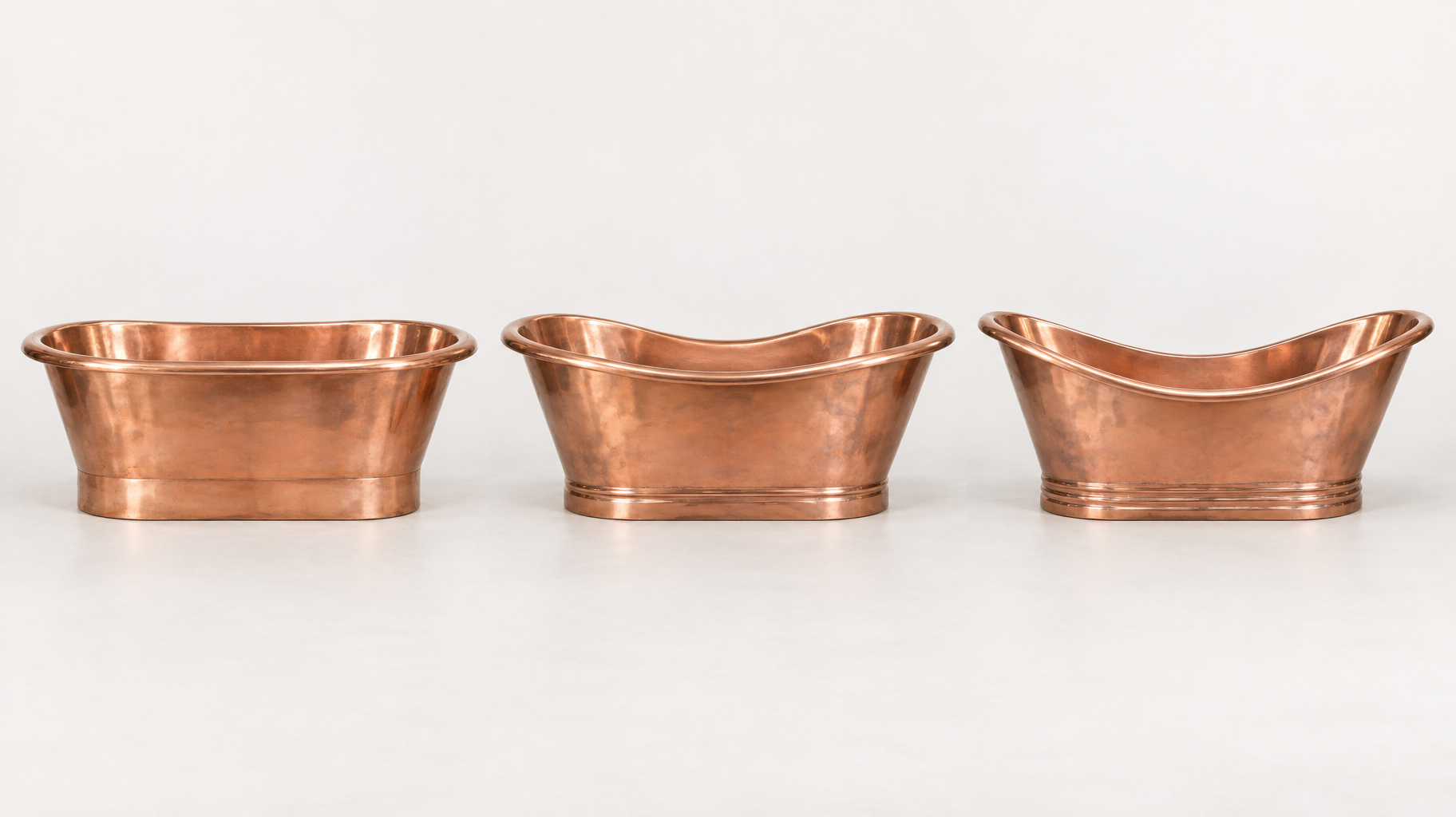
Take three baths that, at first glance, seem to belong to the same family.
One has a rolled rim. One has two raised ends. One sits on a plinth. Perhaps another has feet.
Someone will call one of them a bateau. Someone else will call another a double slipper. A third will call essentially the same thing a French roll-top. And a fourth will add the word luxury, just to make sure.
The problem is not that any one of these names is necessarily wrong. The problem is that they are often answering different questions.
One word is describing the rim. Another is describing the ends. Another is describing the support. Another is suggesting a historical lineage. And somehow we have decided that these are all the same kind of information.
They aren't. That is where things get interesting.
For a long time, we assumed this was just a modern merchandising problem.
It isn't. The older sanitary industry was actually more disciplined than some of the language we use today.
Period manufacturers would give a bath a model or pattern name and then separately specify things like the roll rim, fittings, waste, finish and construction. A bath could be a particular pattern and have a particular rim and a particular set of fittings. The object had a grammar. (Standard Sanitary Manufacturing Co., 1903)
Which feels almost embarrassingly sensible.
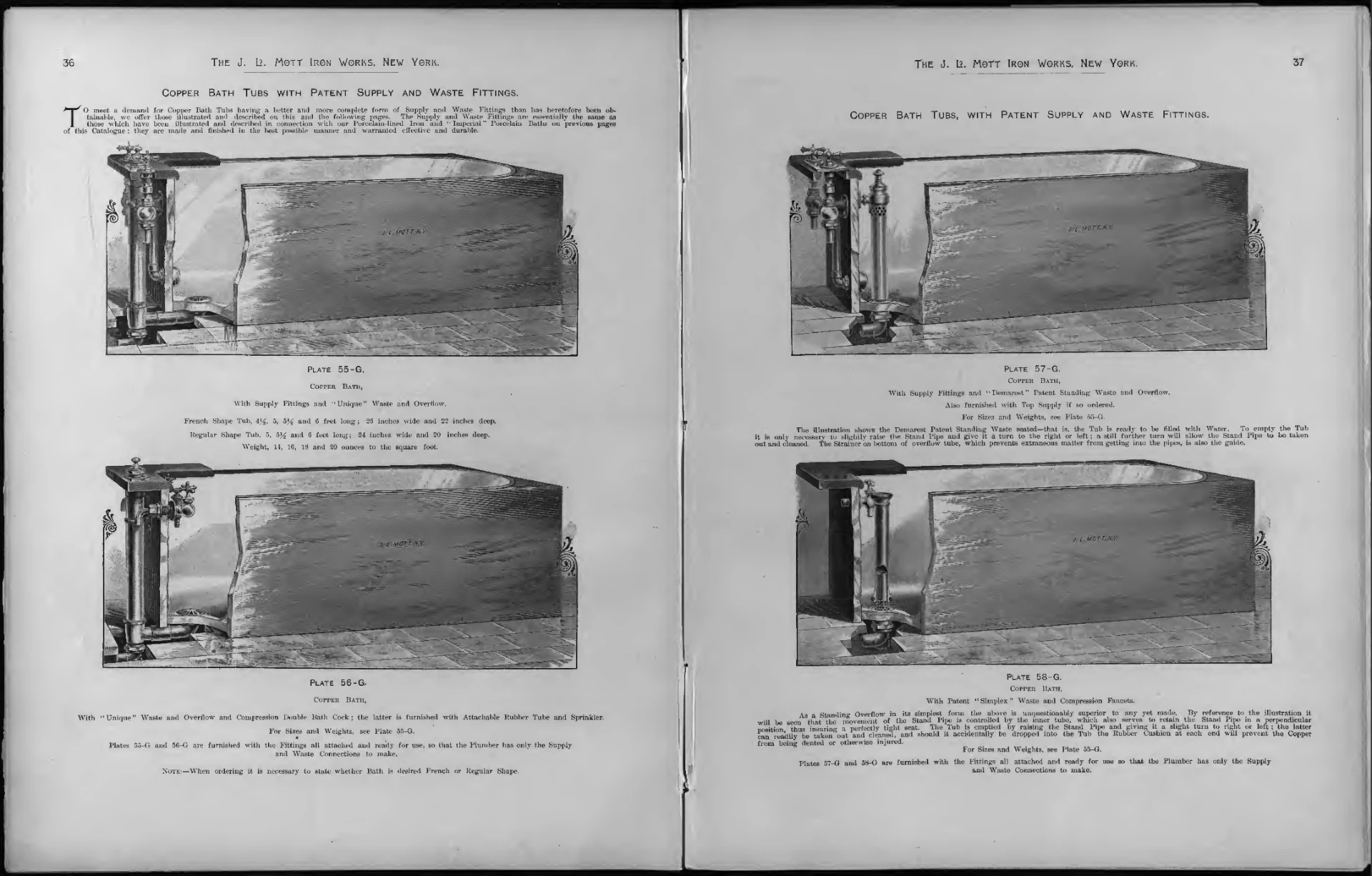
The more we looked, the stranger it became.
A “boat-shaped” bathtub is not some recent luxury invention either. The Smithsonian has an actual nineteenth-century bathtub catalogued as a Boat Shaped Bathtub. It is tin, sits on a painted wooden stand, and the museum notes that these early tubs were often treated almost like pieces of furniture. (Smithsonian)
So even the word boat has a history that is considerably older and broader than the way it gets casually used today.
And then we discover that bateau is something more specific.
And then slipper is something more specific again.
And then double-ended turns out not to mean double slipper.
And then the plinth turns out not to be the style at all.
And suddenly the photograph we thought we understood becomes much less simple.
That, to us, is where design begins.
Not when something is beautiful.
When something becomes difficult to name.
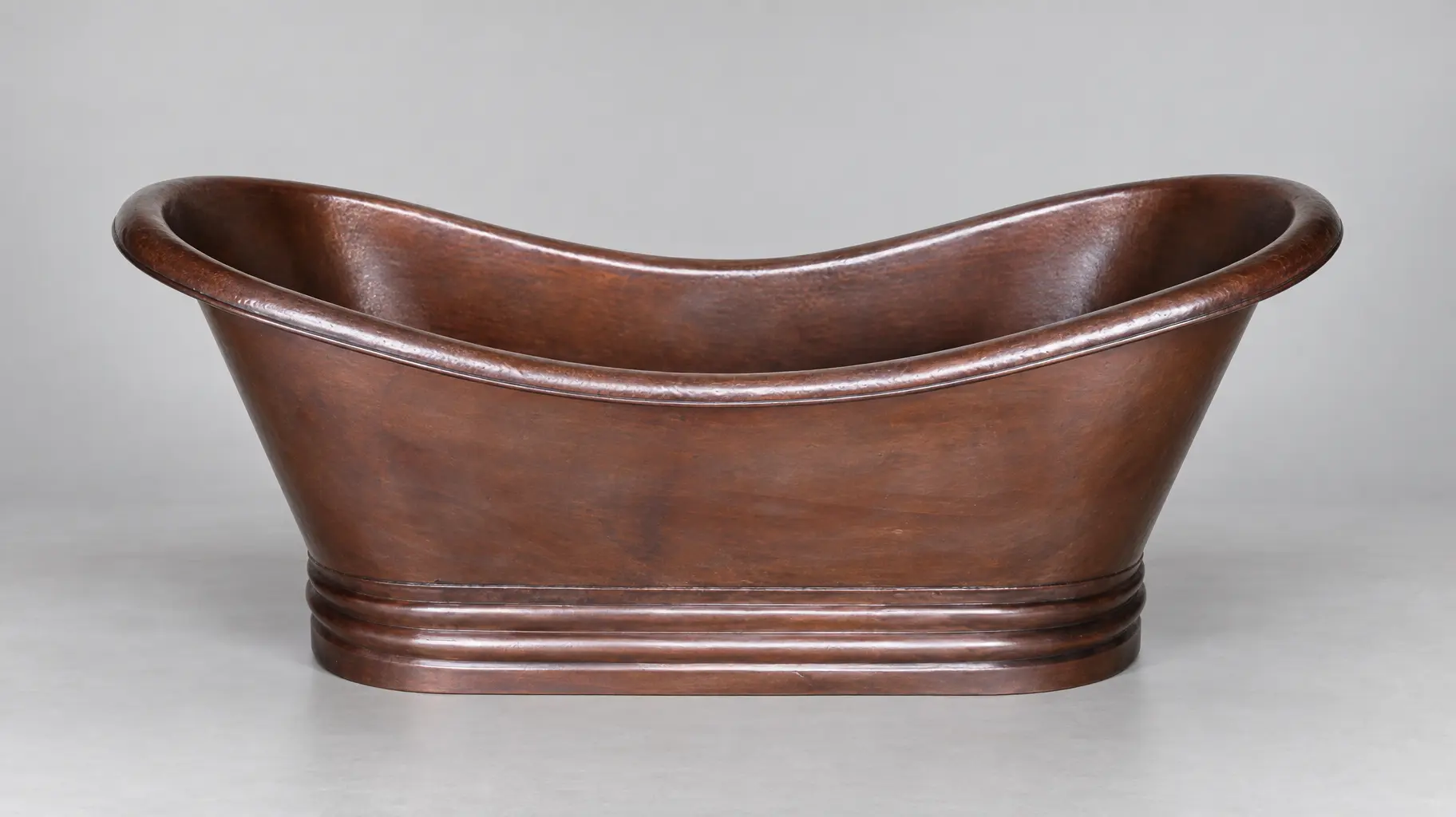
We have become suspicious of the word heritage.
Not because heritage is unimportant. Because it has become a very efficient way of avoiding precision.
A rolled edge can be heritage. Feet can be heritage. A darkened surface can be heritage. A hammered sheet can be heritage. A brass fitting can be heritage.
Put them all together and the object begins to feel historical.
But feeling historical and belonging to a historical typology are not the same thing.
That distinction matters.
A convincing image is not evidence. A convincing finish is not evidence. A convincing name is certainly not evidence.
And this is where we think the industry has an opportunity.
Not to become more complicated. To become more exact.
We don't want ten more categories. We want the existing words to mean what they say.
If something is double-ended, say that. If it has a raised reclining end, say that.
If both ends are raised enough to genuinely change the posture, then perhaps double slipper has earned its place.
If the shell actually belongs to the bateau family, call it bateau.
If it is simply boat-like, perhaps “boat-form” is more honest.
If the plinth is a plinth, let it remain a plinth.
This sounds almost painfully obvious. Perhaps that is the problem.
There is another reason we care about this.
We are entering a period in which images are becoming incredibly easy to produce.
You can generate a beautiful bathroom in seconds. You can give it a French name. You can give it a nineteenth-century date. You can give it a material story. You can give it a heritage story. You can give it an architect. You can give it a history.
And if the lighting is good enough, people will believe you.
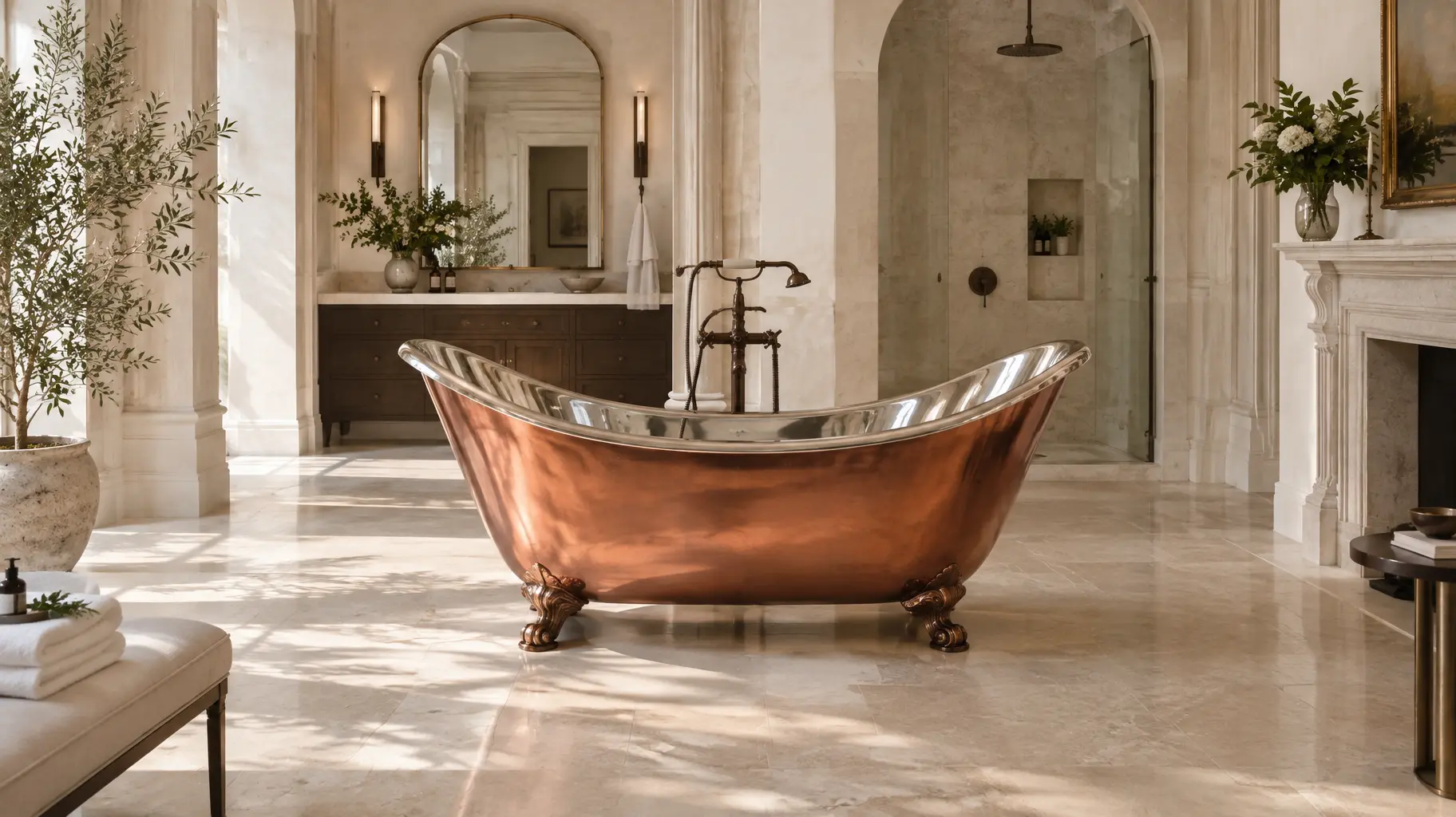
We don't think the answer is to become anti-AI. That would be lazy too.
The useful distinction, for us, is simpler:
AI can accelerate production. It cannot substitute for provenance.
A generated picture can suggest a possibility. It cannot turn that possibility into history.
A product description can repeat a word a thousand times. It still doesn't make the word correct.
A market can agree on a terminology. The market can still be wrong.
And perhaps most importantly: confidence is not the same thing as knowledge.
This is not an argument for killing imagination. Quite the opposite.
Imagination is why we have any interesting objects in the first place.
But imagination deserves better than fake certainty.
We would much rather see a designer write: "We think this is closest to a French bateau, although the available evidence does not establish provenance."
than: "Authentic French-inspired heritage bateau."
The first sentence leaves room for intelligence. The second leaves room for a price tag.
Perhaps this is what we are really trying to say.
The future of design will not be won by the people who can produce the most images. There will be too many images.
It may not even be won by the people with the most products. There are already too many products.
It may belong to the people who can still see distinctions when everyone else has started flattening them.
The distinction between a form and a finish.
Between an object and its marketing.
Between a reference and a source.
Between resemblance and lineage.
Between handmade and genuinely hand-resolved.
Between a historical object and a contemporary object wearing history.
Between something that is simply beautiful—and something that is right.
We find the second much more interesting.
SANCTITY POSITION
We do not think every naming problem needs a new name.
We think some things need to be named properly.
And we are increasingly interested in the space between what an object is, what an industry calls it, and what the evidence actually supports.
More soon.